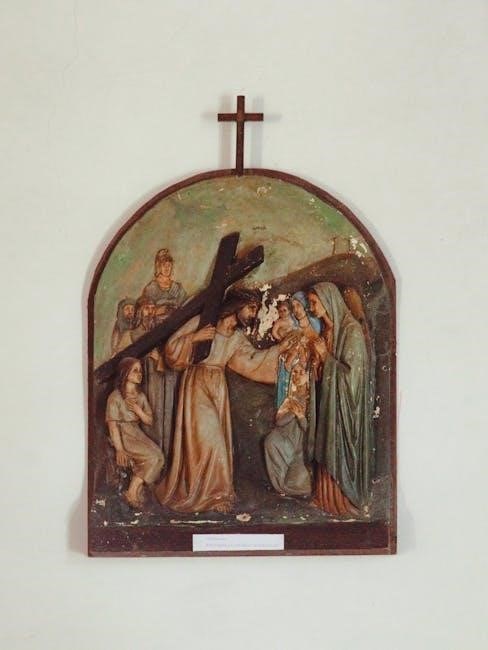
the gospel of mary magdalene pdf

The Gospel of Mary Magdalene: A Comprehensive Overview

The Gospel of Mary Magdalene, available as a PDF via Internet Archive (ISBN 0944344585, 9780944344583), presents Jesus’ teachings and Mary’s unique revelations.

PDFDrive offers a downloadable version, detailing Mary’s role as a key disciple, challenging traditional views within early Christian narratives.

Historical Context & Discovery

The Gospel of Mary Magdalene wasn’t rediscovered until the mid-20th century, significantly later than the canonical Gospels. Fragments were initially identified in Prylands 463, held by the John Rylands University Library in Manchester, and later, more substantial portions surfaced within the Nag Hammadi Library in Egypt.

These Coptic texts, dating back to the 3rd and 4th centuries CE, represent a collection of early Christian and Gnostic writings. The PDF versions circulating today are largely based on translations of these ancient manuscripts. The discovery sparked considerable debate, as the text offers a different perspective on Jesus’ teachings and the role of women in early Christianity, diverging from traditional narratives.

Access to the PDF allows scholars and enthusiasts to examine the historical context and analyze the text’s significance.

The Nag Hammadi Library

The Nag Hammadi Library, unearthed in 1945, proved pivotal in bringing The Gospel of Mary Magdalene to modern attention. This collection of thirteen codices, written in Coptic, contained a wealth of early Christian texts, including Gnostic Gospels previously unknown. The PDF versions available today are primarily based on translations derived from these manuscripts.

The library’s discovery challenged established understandings of early Christian diversity, revealing a spectrum of beliefs beyond the canonical texts. The Gospel of Mary, found amongst these writings, offers a unique perspective on Jesus’ teachings and the role of Mary Magdalene as a prominent disciple.

Scholars utilize the PDF to study the library’s context and the text’s place within Gnostic thought.

Prylands 463 & Other Fragments

Prylands 463, a significant papyrus fragment housed in the John Rylands University Library, contains portions of The Gospel of Mary Magdalene. This fragment, alongside other discovered pieces, contributes to the reconstruction and understanding of the complete text, often accessed through PDF formats online.

Photographs of Prylands 463 are available, aiding scholars in deciphering the Coptic script and comparing variations across different manuscript copies. These fragments are crucial for verifying translations found in PDF versions and understanding the text’s historical transmission.

The PDF accessibility allows for detailed study of these fragments, furthering research into early Christian literature.

Dating the Manuscript

Determining the precise date of The Gospel of Mary Magdalene’s manuscript is complex, relying on paleographic analysis of fragments like Prylands 463 and POxy 3525. Scholars generally place its composition in the second to third centuries CE, based on the Coptic script used in surviving PDF copies.

The PDF versions available for study allow researchers to examine the script’s characteristics, comparing it to other dated texts from the same period. While a definitive date remains elusive, the manuscript predates the establishment of a standardized biblical canon.

Accessing the text as a PDF facilitates comparative analysis, aiding in refining dating estimates.

Content & Key Themes

The Gospel of Mary Magdalene, accessible as a PDF, explores themes of spiritual knowledge (Gnosis), Mary’s discipleship, and challenges to male apostles’ authority.

Mary Magdalene’s Role as a Disciple

The Gospel of Mary Magdalene, readily available as a PDF document through resources like Internet Archive and PDFDrive, significantly elevates Mary’s position beyond traditional portrayals.

The text presents her not merely as a follower, but as a favored disciple receiving unique and profound revelations directly from Jesus – a “first apostle” as suggested by the book’s subtitle. This challenges conventional narratives where male apostles dominate the accounts of Jesus’ teachings.

Within the Gospel, Mary demonstrates a deeper understanding of Jesus’ spiritual message, capable of interpreting his words and sharing them with the other disciples. Her insights provoke both admiration and conflict, particularly from figures like Peter and Andrew, who question her authority and the validity of her revelations. The PDF version allows for close examination of these dynamics.

This portrayal positions Mary as a vital link in transmitting Jesus’ esoteric teachings, emphasizing her importance in the early Christian movement.

Gnostic Influences in the Gospel

Analyzing the Gospel of Mary Magdalene, accessible as a PDF via platforms like the Internet Archive, reveals strong Gnostic influences permeating its core theological concepts.

The text emphasizes gnosis – experiential, intuitive spiritual knowledge – as the key to liberation from the material world, a hallmark of Gnostic thought. This contrasts with faith-based salvation emphasized in canonical Gospels.

The Gospel’s cosmology, discernible within the PDF, depicts a complex hierarchy of spiritual beings and a flawed, material creation. The emphasis on inner understanding and the rejection of worldly attachments align with Gnostic dualism.

Furthermore, the revelations imparted to Mary focus on the nature of the soul’s ascent and its return to the divine realm, central tenets of Gnostic belief. The PDF allows detailed study of these complex ideas.

The Nature of Spiritual Knowledge (Gnosis)

Within the Gospel of Mary Magdalene, readily available as a PDF document, the concept of gnosis – spiritual knowledge – transcends mere intellectual understanding, becoming the pathway to true liberation.

This isn’t acquired through traditional teachings or external authority, but through direct, personal experience and intuitive insight, as revealed in the PDF’s narrative.

Mary’s revelations, detailed in the PDF, emphasize that understanding the divine isn’t about believing doctrines, but about realizing one’s inherent connection to the divine source within.

The text suggests that this inner knowing dissolves the illusion of separation and allows the soul to ascend beyond the limitations of the material world. Studying the PDF reveals a profound emphasis on experiential spirituality.

Conflict with the Male Apostles

The Gospel of Mary Magdalene, accessible as a PDF, portrays significant tension between Mary and the male apostles following Jesus’ ascension, a dynamic vividly depicted within the text.

Peter and Andrew, as detailed in the PDF, question Mary’s authority and the validity of her revelations, expressing disbelief in a woman possessing superior spiritual insight.

This conflict, highlighted in the PDF, isn’t merely a personal dispute, but represents a broader struggle for power and control within the early Christian community.

The apostles’ resistance to Mary’s teachings, as presented in the PDF, underscores the patriarchal norms of the time and the challenge her role posed to established hierarchies.

The Ascent of the Soul

The Gospel of Mary Magdalene, readily available as a PDF, details a complex vision concerning the soul’s journey after death, a central theme within its Gnostic framework.

This PDF reveals a series of spiritual obstacles and encounters the soul faces as it ascends through various powers and realms, striving to return to the divine source.

Mary’s revelation, as presented in the PDF, emphasizes the importance of inner knowledge (gnosis) in overcoming these challenges and achieving liberation from the material world.

The PDF illustrates the soul’s ascent as a process of shedding earthly attachments and recognizing its true, divine nature, ultimately uniting with the higher spiritual reality.

Analysis & Interpretation

Karen L. King’s translation, accessible in PDF format, provides critical commentary on the Gospel of Mary Magdalene, aiding deeper understanding of its complex themes.

Karen L. King’s Translation & Commentary

Karen L. King’s definitive translation of The Gospel of Mary Magdalene, readily available as a PDF (ISBN 0944344585, 9780944344583), is a cornerstone of modern scholarship. Her work, meticulously researched and presented, offers invaluable insights into the text’s historical context and theological significance.

King’s commentary doesn’t merely present the text; it dissects its nuances, exploring the Gnostic influences and the challenges it posed to early Christian orthodoxy. She illuminates Mary Magdalene’s pivotal role as a disciple and a revealer of secret knowledge, contrasting her portrayal with that found in canonical Gospels.

The PDF version allows for detailed study, enabling readers to follow King’s analysis alongside the original text. Her work is essential for anyone seeking a comprehensive understanding of this fascinating and controversial document, found within the Nag Hammadi library.

Comparison with Canonical Gospels

The Gospel of Mary Magdalene, accessible as a PDF (ISBN 0944344585, 9780944344583), diverges significantly from the four canonical Gospels. While the canonical texts emphasize Jesus’ resurrection and salvific death, Mary’s Gospel focuses on Gnostic insights and the ascent of the soul—a distinct theological trajectory.

Unlike the narratives in Matthew, Mark, Luke, and John, Mary’s account highlights her unique relationship with Jesus and her receipt of secret revelations. The canonical Gospels largely silence female disciples; this text elevates Mary Magdalene to a position of authority and spiritual leadership.

Studying the PDF reveals contrasting portrayals of discipleship and the nature of spiritual knowledge. This comparison challenges traditional interpretations and prompts a re-evaluation of early Christian diversity.

Theological Implications of Mary’s Revelation

Analyzing the Gospel of Mary Magdalene, available as a PDF (ISBN 0944344585, 9780944344583), unveils profound theological implications. The text’s emphasis on gnosis – direct, experiential knowledge of the divine – challenges traditional doctrines centered on faith and obedience.

Mary’s revelations suggest an internal, spiritual path to salvation, differing from the canonical Gospels’ focus on external rituals and belief. This Gnostic influence posits that humanity possesses a divine spark, obscured by material existence, which can be awakened through self-knowledge.

The PDF reveals a cosmology where the soul’s ascent beyond the material realm is paramount, reshaping understandings of redemption and the afterlife. This challenges conventional Christian theologies.

Gnostic Cosmology Presented in the Text

The Gospel of Mary Magdalene, accessible as a PDF (ISBN 0944344585, 9780944344583), details a complex Gnostic cosmology. It portrays a universe created by flawed, ignorant powers – the Archons – who impede humanity’s awareness of its divine origin.

This PDF reveals a hierarchical structure of spiritual realms, with the ultimate, unknowable God beyond the grasp of these lower entities. The material world is depicted as a prison, trapping the soul in ignorance and suffering.

Salvation, within this framework, isn’t about escaping punishment but about achieving gnosis – knowledge – that allows the soul to ascend through these realms, overcoming the Archons’ control and returning to its divine source.

Impact & Significance

The Gospel of Mary Magdalene PDF sparked debate, influencing feminist theology and re-evaluating women’s roles in early Christianity, challenging traditional authority.

Feminist Theology & Mary Magdalene

The Gospel of Mary Magdalene PDF has become a cornerstone text within feminist theological discourse, offering a powerful counter-narrative to patriarchal interpretations of early Christian history. Karen L. King’s translation and analysis, readily available in digital formats, highlights Mary’s authority as a disciple and revealer of Jesus’ teachings.

This challenges the traditional silencing of women’s voices in religious texts and leadership. The text’s emphasis on inner spiritual knowledge (gnosis), rather than hierarchical structures, resonates with feminist critiques of institutionalized religion.

By presenting Mary as possessing a deeper understanding of Jesus’ message, the gospel provides a model for female spiritual leadership and validates women’s experiences of the divine. It fuels ongoing discussions about gender equality and inclusivity within contemporary religious thought.

Re-evaluating the Role of Women in Early Christianity

The Gospel of Mary Magdalene PDF compels a critical re-examination of women’s contributions to early Christian movements, moving beyond traditional, male-dominated historical accounts. The text, accessible through resources like the Internet Archive, portrays Mary not merely as a follower, but as a significant spiritual authority, receiving and interpreting Jesus’ teachings.

This challenges the conventional narrative that minimized women’s roles to passive recipients of faith. The gospel suggests a more diverse and egalitarian early church than previously acknowledged, where women actively participated in theological discourse and leadership.

Analyzing the PDF alongside canonical gospels reveals discrepancies in portrayals of female disciples, prompting scholars to question biases in the selection and preservation of religious texts.

The Gospel’s Challenge to Traditional Authority

The Gospel of Mary Magdalene PDF presents a significant challenge to established religious authority, particularly concerning the transmission of Jesus’ teachings. Its depiction of Mary receiving unique revelations, not shared with the male apostles, directly questions the exclusive authority granted to Peter and others in canonical texts.

The text, readily available via digital resources, suggests a conflict within the early church regarding the legitimacy of differing spiritual insights.

This challenges the notion of a unified, hierarchical structure, hinting at diverse interpretations and power dynamics.

The PDF’s existence itself is a challenge, as its exclusion from the biblical canon demonstrates a deliberate suppression of alternative perspectives.

Modern Interpretations & Popular Culture

The Gospel of Mary Magdalene PDF has profoundly impacted modern feminist theology and popular culture, sparking reinterpretations of Mary’s role. Its rediscovery fueled narratives reclaiming her as an apostle equal to Peter, challenging traditional patriarchal views.

The text’s emphasis on inner spiritual knowledge (Gnosis) resonates with New Age spirituality and contemporary quests for personal enlightenment.

Numerous books and articles, accessible alongside the PDF, explore these themes, often portraying Mary as a powerful spiritual leader.

Furthermore, the gospel has inspired artistic representations and fictional works, solidifying Mary Magdalene’s image as a symbol of female empowerment and spiritual authority.

Accessing the Text

The Gospel of Mary Magdalene PDF is readily available through Internet Archive and PDFDrive, utilizing ISBN 0944344585 for easy identification.

PDF Availability & Online Resources

The Gospel of Mary Magdalene exists in accessible PDF format through several online platforms, facilitating scholarly study and broader readership. PDFDrive provides a direct download link, cataloging it with identifier-ark ark:/13960/s2770272m21.

Internet Archive also hosts digital copies, ensuring preservation and widespread access to this important Gnostic text. Utilizing the ISBN numbers – 0944344585 and 9780944344583 – aids in locating specific editions.

These resources offer scanned versions, often employing OCR (Optical Character Recognition) technology, like Tesseract 5.3.0-3-g9920, to enable text searching within the document. Researchers and enthusiasts can freely borrow and stream the text, promoting engagement with this historically significant work.

Internet Archive & Digital Copies

The Internet Archive serves as a crucial repository for digital copies of The Gospel of Mary Magdalene in PDF format, ensuring its long-term preservation and accessibility. Users can readily access and download the text, contributing to its wider dissemination within academic and spiritual communities.

The archive’s entry, identified by ark:/13960/s2770272m21, features versions processed with OCR technology (Tesseract 5.3.0-3-g9920) for enhanced searchability. This allows researchers to efficiently locate specific passages and themes within the Gospel.

These digital reproductions, often sourced from scholarly editions (ISBN 0944344585, 9780944344583), provide a valuable resource for studying Gnostic texts and the historical context of early Christianity.

ISBN & Publication Details (0944344585, 9780944344583)

The Gospel of Mary Magdalene, as translated by Karen L. King, is identifiable by its ISBN numbers: 0-944344-58-5 and 9780944344583. These numbers are crucial for locating specific editions of the text, particularly when searching library catalogs or online booksellers.

Published editions often include introductory material, scholarly commentary, and contextual information regarding the manuscript’s discovery and interpretation. PDF versions circulating online frequently reference these published sources, ensuring accuracy and traceability.

The Library of Congress Cataloging-in-Publication Data further details the book’s specifics, aiding in academic research and proper citation. Accessing publications with these ISBNs guarantees a reliable and vetted version of the Gospel.

Bridge Building Images & Related Artwork

Visual representations of Mary Magdalene often accompany discussions of The Gospel of Mary Magdalene, enriching understanding and fostering contemplation. Bridge Building Images (www.BridgeBuilding.com) provides color reproductions, including artwork by Robert Lentz, frequently used in connection with the text.

These images depict Mary not as a repentant sinner, but as a profound spiritual leader and close disciple of Jesus, aligning with the Gospel’s portrayal. Exploring related artwork alongside the PDF version of the text enhances the interpretive experience.

Such visual aids offer a powerful counterpoint to traditional depictions, promoting a more nuanced and historically informed perspective on Mary Magdalene’s significance.

Further Research

The Gospel of Mary Magdalene PDF invites deeper study via resources like The Gospel Coalition and archives at Ashmolean Museum & John Rylands.

The Gospel Coalition & Related Discussions

The Gospel Coalition, a fellowship of pastors and theologians, offers discussions relevant to understanding texts like The Gospel of Mary Magdalene PDF. Initial contact regarding the Coalition came from Don Carson and Tim Keller, aiming to unite exegetically-driven leaders.

While the Coalition primarily focuses on traditional Christian theology, exploring alternative gospels like Mary’s sparks debate about canon formation and early Christian diversity. Examining these discussions provides context for interpreting the PDF’s unique perspective.

Researchers can analyze how the Coalition’s members might approach the text’s Gnostic influences and Mary Magdalene’s elevated role, contrasting it with canonical gospel portrayals.

Ashmolean Museum & POxy 3525

The Ashmolean Museum, University of Oxford, holds fragments related to early Christian texts, including material pertinent to understanding the context of The Gospel of Mary Magdalene PDF. Specifically, POxy 3525, a papyrus fragment, contributes to the broader scholarly understanding of early gospel traditions.

While POxy 3525 isn’t directly a portion of Mary’s Gospel, its existence demonstrates the diversity of early Christian writings circulating in Egypt. Accessing images and research related to POxy 3525 aids in contextualizing the PDF’s significance.

Researchers utilize these fragments to reconstruct the literary landscape surrounding the creation and transmission of texts like the Gospel of Mary.

John Rylands University Library & Manuscript Holdings

The John Rylands University Library in Manchester possesses Prylands 463, a crucial fragment directly related to The Gospel of Mary Magdalene PDF. This papyrus, dating back to the 3rd or 4th century, offers invaluable insight into the text’s early form and transmission.

Photographs of Prylands 463 are available, providing researchers with direct access to this significant piece of the manuscript. Studying this fragment alongside the complete PDF version enhances comprehension.

The Library’s holdings contribute significantly to the ongoing scholarly debate surrounding the Gospel’s origins and theological implications.

Understanding the Core Message of “The Gospel”

Examining The Gospel of Mary Magdalene PDF reveals a focus on inner spiritual knowledge – gnosis – as the path to liberation. Unlike canonical Gospels emphasizing faith and obedience, Mary’s Gospel prioritizes direct experiential understanding of divine truth.

The text details the ascent of the soul after death, guided by inner insights, and challenges conventional views of Jesus’ teachings. It emphasizes the importance of overcoming the fear of death through self-discovery.

Understanding this core message requires careful consideration of its Gnostic influences and its unique portrayal of Mary Magdalene’s role.

rocks and minerals pdf

Article Plan: Rocks and Minerals PDF Guide

This comprehensive PDF guide details rock identification‚ mineral properties‚ and the rock cycle‚ featuring charts for classifying igneous‚ sedimentary‚ and metamorphic rocks․

Rocks and minerals are fundamental components of our planet‚ forming Earth’s solid structure; this guide provides essential identification knowledge for these natural materials․

What are Rocks?

Rocks are naturally occurring solid aggregates of one or more minerals․ Think of them as Earth’s building blocks‚ constantly being formed and transformed through geological processes․ They aren’t simply random collections; their composition and texture reveal clues about their origins․

Understanding rock types – igneous‚ sedimentary‚ and metamorphic – is crucial for deciphering Earth’s history․ These classifications are based on how the rocks were created: cooled from magma‚ accumulated from sediments‚ or altered by heat and pressure․

This guide will equip you with the tools to begin rock identification‚ focusing on observable characteristics․ Recognizing the minerals within a rock is a key step in determining its classification and understanding its story․ Rock classification charts are invaluable resources!

What are Minerals?

Minerals are naturally occurring‚ inorganic solids with a definite chemical composition and a crystalline structure․ Unlike rocks‚ which are aggregates‚ minerals are fundamental units․ Each mineral possesses unique physical properties – hardness‚ luster‚ streak‚ and cleavage – that aid in identification․

These properties stem from the arrangement of atoms within the mineral’s crystal lattice․ For example‚ hardness‚ measured on the Mohs scale‚ reflects the strength of atomic bonds․ Understanding these properties is essential for distinguishing between different minerals․

Mineral identification is a cornerstone of geology and is vital for understanding the composition of rocks․ This guide will detail how to utilize these key properties‚ alongside charts‚ to accurately classify various minerals found in nature and within geological samples․

The Rock Cycle – A Continuous Process

The rock cycle is a fundamental concept in geology‚ illustrating the continuous transformation between igneous‚ sedimentary‚ and metamorphic rocks․ This cycle demonstrates that rocks aren’t static; they are constantly being created‚ altered‚ and recycled through geological processes․

Driven by Earth’s internal heat and external forces‚ the cycle involves melting‚ cooling‚ weathering‚ erosion‚ compaction‚ cementation‚ and metamorphism․ Igneous rocks can become sedimentary through weathering‚ or metamorphic through heat and pressure․ Sedimentary rocks can melt into magma‚ restarting the cycle․

Understanding the rock cycle is crucial for interpreting Earth’s history and the formation of various geological features․ This guide will explain each stage‚ linking mineral composition to the processes driving this dynamic system‚ providing a holistic view of Earth’s geological evolution․

Igneous Rock Identification

Igneous rocks form from cooled magma or lava; identification relies on texture—crystalline or aphanitic—and mineral composition‚ as detailed in this guide․

Formation of Igneous Rocks

Igneous rocks originate from the cooling and solidification of molten rock material․ This material can be magma‚ found beneath the Earth’s surface‚ or lava‚ which erupts onto the surface․ The rate of cooling significantly impacts the rock’s texture․ Slow cooling‚ typically occurring deep underground‚ allows for the formation of larger‚ visible crystals‚ resulting in intrusive igneous rocks․

Conversely‚ rapid cooling on the Earth’s surface‚ as seen with lava flows‚ produces fine-grained or even glassy textures‚ characteristic of extrusive igneous rocks․ The mineral composition of the magma or lava also plays a crucial role‚ dictating the specific types of minerals that crystallize and ultimately define the rock type․ Understanding these processes is key to accurate identification․

Intrusive vs․ Extrusive Igneous Rocks

Igneous rocks are broadly categorized as intrusive or extrusive‚ based on their formation location and cooling rate․ Intrusive rocks‚ also known as plutonic rocks‚ form from magma that cools slowly beneath the Earth’s surface․ This slow cooling allows large crystals to develop‚ resulting in a coarse-grained texture – easily visible mineral grains․ Granite is a classic example․

Extrusive rocks‚ or volcanic rocks‚ are created from lava that cools quickly on the Earth’s surface․ Rapid cooling inhibits crystal growth‚ leading to fine-grained‚ aphanitic textures‚ or even glassy textures if cooling is extremely fast․ Basalt and obsidian are common extrusive rocks․ Recognizing these textural differences is fundamental to identification․

Identifying Igneous Rocks – Texture and Composition

Identifying igneous rocks relies heavily on analyzing their texture and mineral composition․ Texture‚ as previously discussed‚ reveals cooling history – coarse-grained indicates slow cooling (intrusive)‚ while fine-grained or glassy suggests rapid cooling (extrusive)․ Examining mineral content is equally crucial․

Rocks rich in feldspar and quartz‚ like granite‚ have a felsic composition․ Those with abundant dark‚ magnesium- and iron-rich minerals‚ such as olivine and pyroxene‚ are mafic (basalt)․ Intermediate compositions exist‚ blending these characteristics․ An identification chart assists in correlating texture and mineral assemblages to specific rock types․ Careful observation under magnification can reveal subtle differences aiding accurate classification․

Sedimentary Rock Identification

Sedimentary rocks form from accumulated sediments‚ categorized by their origin – clastic‚ chemical‚ or organic – and identified through grain size and unique features․

Formation of Sedimentary Rocks

Sedimentary rocks arise from the accumulation and cementation of sediments – fragments of pre-existing rocks‚ mineral grains‚ or organic matter․ This process‚ known as lithification‚ begins with weathering and erosion‚ breaking down source rocks into smaller pieces․

These sediments are then transported by agents like water‚ wind‚ or ice‚ eventually depositing in layers․ Compaction‚ due to the weight of overlying materials‚ reduces pore space‚ while cementation binds the particles together through mineral precipitation․

Different environments – rivers‚ lakes‚ oceans‚ deserts – yield distinct sedimentary features․ Understanding these depositional settings is crucial for interpreting a rock’s history and origin‚ aiding in accurate identification․

Clastic‚ Chemical‚ and Organic Sedimentary Rocks

Sedimentary rocks are broadly categorized into three main types based on their formation․ Clastic rocks‚ like sandstone and shale‚ form from fragments of other rocks and minerals – categorized by grain size․ Chemical rocks‚ such as limestone and rock salt‚ precipitate directly from solutions‚ often through evaporation or chemical reactions․

Organic sedimentary rocks‚ including coal and some limestones‚ originate from the accumulation and lithification of organic matter‚ like plant remains or shells․ Each type exhibits unique characteristics․

Identifying these categories requires careful observation of texture‚ composition‚ and the presence of fossils‚ providing clues to the rock’s origin and the ancient environment in which it formed – essential for rock identification․

Identifying Sedimentary Rocks – Grain Size and Features

Identifying sedimentary rocks relies heavily on analyzing grain size and distinctive features․ Clastic rocks are classified by particle size: gravel (conglomerate/breccia)‚ sand (sandstone)‚ silt (siltstone)‚ and clay (shale)․ Larger grains indicate higher energy depositional environments․

Beyond size‚ observe rounding and sorting of grains – well-rounded grains suggest extensive transport․ Features like bedding‚ cross-bedding‚ and ripple marks reveal past current directions․ The presence of fossils is a key indicator‚ offering insights into past life․

Chemical features‚ like evaporite crystals‚ and organic remnants aid identification‚ providing a comprehensive understanding of the rock’s history and formation process․

Metamorphic Rock Identification

Metamorphic rocks‚ altered by heat and pressure‚ are identified by texture—foliated (layered) or non-foliated—and mineral composition‚ revealing their origins․

Formation of Metamorphic Rocks

Metamorphic rocks arise from the transformation of existing rocks – igneous‚ sedimentary‚ or even other metamorphic varieties – through processes occurring deep within the Earth․ This transformation‚ termed metamorphism‚ doesn’t involve melting; instead‚ it’s a solid-state alteration driven by increases in temperature‚ pressure‚ or exposure to chemically active fluids․

Heat‚ often from magma intrusions or geothermal gradients‚ provides the energy for recrystallization and mineral changes․ Pressure‚ stemming from burial or tectonic forces‚ compacts the rock and influences mineral alignment․ Chemically active fluids can introduce or remove elements‚ altering the rock’s composition․ These factors combine to create new mineral assemblages and textures‚ defining the metamorphic rock․

The degree of metamorphism dictates the resulting rock type‚ ranging from low-grade (slight changes) to high-grade (significant alterations)․ Understanding these formative processes is crucial for accurate identification․

Foliated vs․ Non-Foliated Metamorphic Rocks

Metamorphic rocks exhibit distinct textures categorized as foliated or non-foliated‚ reflecting the conditions of their formation․ Foliation describes a layered or banded appearance‚ resulting from the parallel alignment of mineral grains under directed pressure during metamorphism․ Common foliated rocks include slate‚ schist‚ and gneiss‚ each displaying increasing degrees of mineral segregation and grain size․

Conversely‚ non-foliated metamorphic rocks lack this layered structure․ They typically form under conditions of equal pressure from all directions‚ or when the parent rock contains primarily blocky minerals like quartz or calcite․ Examples include marble (metamorphosed limestone) and quartzite (metamorphosed sandstone)․

Distinguishing between these textures is a fundamental step in rock identification‚ providing clues about the rock’s origin and the metamorphic forces it endured․

Identifying Metamorphic Rocks – Texture and Mineral Composition

Identifying metamorphic rocks relies heavily on observing both their texture – foliated or non-foliated – and the mineral composition․ Foliated rocks‚ like schist‚ are identified by visible parallel mineral alignment (mica is common)‚ while gneiss shows distinct banding․ Non-foliated rocks‚ such as marble‚ often display interlocking mineral grains‚ primarily calcite․

Key minerals to recognize include garnet‚ staurolite‚ and kyanite‚ indicative of higher-grade metamorphism․ The presence of specific minerals‚ alongside texture‚ helps determine the parent rock and the metamorphic conditions․ Careful examination using a hand lens reveals crucial details․

Rock identification charts are invaluable tools‚ correlating observed features with known rock types‚ aiding in accurate classification and understanding of geological history․

Mineral Identification – Key Properties

Mineral identification utilizes properties like hardness (Mohs scale)‚ streak‚ luster‚ and cleavage‚ alongside specific gravity‚ to accurately classify these natural‚ crystalline solids․

Hardness (Mohs Scale)

Determining a mineral’s hardness is crucial for identification‚ and the Mohs Hardness Scale provides a relative measure of resistance to scratching․ Developed by Friedrich Mohs in 1812‚ this scale ranks minerals from 1 (talc‚ the softest) to 10 (diamond‚ the hardest)․

A mineral can scratch any substance lower than its hardness value․ For example‚ quartz (hardness 7) will scratch feldspar (hardness 6)‚ but not topaz (hardness 8)․ Common reference materials include a fingernail (around 2․5)‚ a copper penny (around 3․5)‚ and a steel knife (around 5․5)․

This simple scratch test‚ combined with other properties‚ allows for preliminary mineral identification in the field․ Understanding the Mohs scale is fundamental to geological study and rock analysis․

Streak‚ Luster‚ and Cleavage

Beyond hardness‚ streak‚ luster‚ and cleavage are vital for mineral identification․ Streak refers to the color of a mineral’s powder when rubbed against a streak plate (unglazed porcelain)․ It’s a more reliable property than the mineral’s apparent color․

Luster describes how light reflects off a mineral’s surface – metallic‚ glassy (vitreous)‚ pearly‚ silky‚ or dull․ Cleavage describes the tendency of a mineral to break along specific planes of weakness‚ creating smooth‚ flat surfaces․ Minerals with good cleavage break easily and predictably․

Conversely‚ fracture describes irregular breakage patterns․ Observing these properties‚ alongside hardness‚ significantly narrows down potential mineral identifications within a rocks and minerals study․

Specific Gravity and Other Identifying Features

Specific gravity‚ a mineral’s density relative to water‚ aids in identification; a higher number indicates a heavier mineral for its size․ While requiring specialized equipment for precise measurement‚ it’s a valuable diagnostic tool․ Other features‚ like magnetism (magnetite) or reaction to acid (calcite)‚ provide further clues․

Diaphaneity‚ or how light transmits through a mineral (transparent‚ translucent‚ opaque)‚ is also helpful․ Unique properties‚ such as a salty taste (halite) or a double refraction effect (calcite)‚ can be definitive․ Careful observation of all characteristics‚ combined with previous tests‚ allows for accurate mineral and ultimately rock classification․

These details are crucial within a comprehensive rocks and minerals PDF guide․

multiplication word problems grade 5 pdf

Fifth-grade students build upon prior knowledge‚ tackling multiplication word problems involving larger numbers and multiple steps‚ often found in PDF worksheets.

These problems enhance problem-solving skills and real-world application of mathematical concepts‚ preparing students for more advanced topics.

What are Multiplication Word Problems?

Multiplication word problems‚ frequently available as Grade 5 PDF worksheets‚ present mathematical scenarios requiring repeated addition‚ expressed more efficiently through multiplication. These aren’t simply equations; they’re real-world situations disguised as math challenges.

Students must decipher the context‚ identify the necessary information‚ and determine if multiplication is the correct operation. Examples include calculating the total number of items in equal groups‚ or finding the area of a rectangle.

Successfully solving these problems demands comprehension‚ analytical thinking‚ and the ability to translate words into mathematical expressions. They are a cornerstone of 5th-grade math curriculum.

Why are they important in 5th Grade?

Multiplication word problems‚ often practiced via Grade 5 PDF worksheets‚ are crucial for developing critical thinking and problem-solving abilities. They move beyond rote memorization‚ requiring students to apply multiplication in practical contexts.

Mastery builds a foundation for more complex mathematical concepts like division‚ fractions‚ and algebra. These problems enhance analytical skills‚ encouraging students to dissect information and identify relevant data.

Furthermore‚ they connect math to everyday life – calculating costs‚ measuring areas‚ or determining quantities – fostering a deeper understanding and appreciation for the subject.

Understanding the Basics

Grade 5 PDF worksheets focus on foundational skills: recognizing multiplication as repeated addition and understanding its relationship to equal groups and arrays.

Key Vocabulary in Multiplication Word Problems

Grade 5 multiplication word problems‚ often presented in PDF format‚ utilize specific vocabulary crucial for comprehension. Key terms include “product‚” representing the answer to a multiplication problem‚ and “factors‚” the numbers being multiplied.

Students must also understand terms like “total‚” “each‚” “groups of‚” and “times.” Recognizing words indicating equal groups is vital; Worksheets frequently employ phrases like “per‚” “every‚” or “combined” to signal multiplication is needed.

Mastering this vocabulary allows students to accurately interpret the problem and select the correct operation‚ ultimately leading to successful problem-solving.

Identifying Multiplication Keywords

Successfully solving grade 5 multiplication word problems‚ frequently found as PDF worksheets‚ relies on recognizing key words. These signal the need for multiplication. Common keywords include “product‚” “times‚” “multiply‚” and “of.”

Phrases like “each group has‚” “groups of‚” or “total number of” are strong indicators. Students should also look for scenarios describing equal groups or repeated addition. Identifying these keywords helps students translate the word problem into a mathematical equation.

However‚ caution is needed; context is crucial‚ as some keywords can have multiple meanings. Careful reading is essential!

Strategies for Solving Multiplication Word Problems

Grade 5 multiplication word problems (often in PDF format) are best tackled with structured methods like “Read‚ Understand‚ Plan‚ Solve‚ Check” for accuracy.

The Read‚ Understand‚ Plan‚ Solve‚ Check Method

Successfully navigating 5th grade multiplication word problems‚ frequently available as PDF worksheets‚ hinges on a systematic approach. The “Read‚ Understand‚ Plan‚ Solve‚ Check” method provides this structure.

Read the entire problem carefully‚ identifying key information. Understand what the question is asking – what needs to be found? Next‚ Plan a solution strategy‚ determining the necessary operations. Then‚ Solve the problem‚ showing all work. Finally‚ Check your answer for reasonableness and accuracy.

This method‚ when applied to multiplication word problems‚ ensures students don’t misinterpret the question or perform incorrect operations‚ leading to confident and correct solutions.

Visual Models: Using Arrays and Equal Groups

Visualizing multiplication word problems‚ often found in 5th grade PDF worksheets‚ is crucial for comprehension. Two powerful models are arrays and equal groups.

Equal groups represent the problem as a series of sets with the same number of items‚ directly illustrating the concept of repeated addition. Arrays‚ arranged in rows and columns‚ demonstrate multiplication as the area of a rectangle.

These models help students transition from concrete understanding to abstract thinking‚ making complex multiplication word problems more accessible. They provide a visual representation‚ aiding in identifying the factors and the product.

Types of Multiplication Word Problems

Grade 5 PDF worksheets present diverse problems: one-step‚ multi-step‚ and those involving larger numbers‚ building skills progressively.

Students learn to discern the appropriate strategy for each scenario.

One-Step Multiplication Problems

One-step multiplication word problems‚ frequently found in grade 5 PDF worksheets‚ focus on a single operation to arrive at the solution. These problems are designed to reinforce the fundamental concept of multiplication as repeated addition.

Examples include scenarios like: “Amy has 7 bags of apples‚ and each bag contains 8 apples. How many apples does Amy have in total?” Students identify the key numbers (7 and 8) and the operation (multiplication) to calculate 7 x 8 = 56 apples.

These problems build confidence and provide a solid foundation for tackling more complex‚ multi-step challenges. Mastering these basics is crucial before progressing.

Multi-Step Multiplication Problems

Multi-step multiplication problems‚ common in grade 5 PDF worksheets‚ require students to perform multiple operations – often including multiplication alongside addition‚ subtraction‚ or division – to find the answer.

An example: “A store sells pencils in boxes of 12. If a teacher buys 5 boxes and also 8 individual pencils‚ how many pencils did the teacher buy in total?” This requires multiplying 5 x 12 = 60‚ then adding 8 to get 68 pencils.

These problems assess a student’s ability to analyze a situation‚ determine the correct order of operations‚ and apply multiplication strategically within a larger calculation.

Multiplication with Larger Numbers

Grade 5 multiplication word problems PDF resources frequently feature problems involving larger numbers‚ extending beyond single-digit multiplication. Students encounter scenarios requiring them to multiply two-digit or even three-digit numbers.

For instance‚ a problem might ask: “A school is ordering new textbooks. Each textbook costs $28‚ and they need to order 135 copies. What is the total cost?” This necessitates multiplying 28 x 135.

These problems reinforce the standard multiplication algorithm and emphasize the importance of place value‚ ensuring students can accurately handle more complex calculations within real-world contexts.

Real-World Applications

Multiplication word problems‚ often available as a grade 5 PDF‚ connect math to daily life – calculating costs‚ areas‚ or quantities‚ fostering practical skills.

Examples of Multiplication in Everyday Life

Multiplication word problems‚ frequently found in grade 5 PDF worksheets‚ mirror real-world scenarios. Consider calculating the total number of chocolates when Amy prepares party bags for ten friends‚ each receiving three chocolates – a simple 10 x 3 problem.

Another example involves a teacher arranging 36 chairs into rows of nine; determining the number of rows utilizes multiplication. Calculating the total cost of multiple items‚ like buying five books at $8 each‚ also relies on this skill.

These examples demonstrate how multiplication isn’t just an abstract concept‚ but a fundamental tool for solving practical problems encountered daily.

Connecting Math to Other Subjects

Multiplication word problems‚ often practiced via grade 5 PDF worksheets‚ aren’t isolated to mathematics. They seamlessly integrate with science‚ for instance‚ calculating the area of a rectangular garden or determining the total number of seeds needed.

In social studies‚ multiplication aids in understanding population growth or calculating distances on maps. Even language arts benefits‚ as students analyze patterns in stories or calculate reading speeds.

A film featuring math homework highlights this connection‚ demonstrating how multiplication and division are relevant beyond the classroom. This interdisciplinary approach reinforces learning and showcases math’s practical value.

Resources for Practice

Numerous free multiplication word problem worksheets in Grade 5 PDF format are readily available online‚ alongside generators for customized practice sessions.

Free Printable Multiplication Word Problem Worksheets (Grade 5 PDF)

Grade 5 multiplication word problem worksheets in PDF format offer a convenient and cost-effective way for students to hone their skills. These resources typically feature a variety of problem types‚ ranging from one-step calculations to more complex multi-step scenarios.

Many websites provide downloadable PDFs categorized by difficulty level‚ allowing educators and parents to tailor practice to individual student needs. Worksheets often include answer keys for easy assessment. These printable materials are excellent for reinforcing concepts learned in the classroom‚ providing extra practice for struggling learners‚ or offering challenging extensions for advanced students.

Look for worksheets focusing on real-world applications to enhance engagement and demonstrate the practical relevance of multiplication.

Online Multiplication Word Problem Generators

Online multiplication word problem generators provide a dynamic alternative to static PDF worksheets. These tools allow educators and students to create an unlimited number of unique problems‚ customized to specific skill levels and parameters. Users can often adjust the range of numbers used‚ the complexity of the scenarios‚ and even the context of the problems.

Many generators offer instant feedback and step-by-step solutions‚ promoting independent learning. This interactive approach can be particularly beneficial for students who benefit from repeated practice and immediate reinforcement. While PDFs offer portability‚ online generators provide adaptability and a constantly refreshed learning experience.

Explore options offering varied problem types and difficulty settings.

Example Problems and Solutions

Let’s examine a typical 5th-grade multiplication word problem often found in PDF practice sets: “A bakery makes 24 cupcakes per hour. How many cupcakes do they make in an 8-hour workday?” The solution involves multiplying 24 x 8‚ resulting in 192 cupcakes.

Another example: “Sarah earns $15 per hour babysitting. If she babysits for 6 hours on Friday and 4 hours on Saturday‚ how much money will she earn?” This requires two steps: (6 x $15) + (4 x $15) = $90 + $60 = $150.

Working through these examples‚ alongside checking solutions‚ reinforces understanding and builds confidence when tackling similar problems.

Common Mistakes to Avoid

PDF worksheets often trip up students with misinterpreting questions or using incorrect operations. Careful reading and identifying key information are crucial for success.

Misinterpreting the Question

Misinterpreting the question is a frequent error when solving multiplication word problems‚ especially when using PDF worksheets. Students may focus on numbers presented without fully understanding what the problem is asking them to calculate.

For example‚ a problem might state the number of chairs and rows‚ but ask for the total number of students‚ not chairs. Carefully underlining the question and identifying key words is vital. Students should rephrase the question in their own words to ensure comprehension before attempting any calculations. Ignoring units or focusing on irrelevant information also contributes to misinterpretation.

Always read the entire problem before starting‚ and double-check that your answer directly addresses the question asked.

Incorrect Operations

A common mistake in multiplication word problems‚ often encountered in Grade 5 PDF worksheets‚ is selecting the incorrect operation. Students might add when multiplication is required‚ or divide when multiplication is the appropriate solution. This stems from not fully grasping the relationship between the problem’s wording and the mathematical operation needed.

Keywords can be misleading; simply spotting “total” doesn’t automatically mean multiplication. Understanding the problem’s context is crucial. For instance‚ problems describing equal groups usually indicate multiplication‚ while separating into equal parts suggests division.

Always ask: “Is this about combining equal groups‚ or splitting something up?” Reviewing the problem and verifying the chosen operation is essential.

Advanced Concepts

Grade 5 PDF worksheets introduce multiplication with variables and encourage estimation to check the reasonableness of answers‚ building analytical skills.

Multiplication with Variables

Grade 5 multiplication word problems‚ often available as PDF resources‚ begin to incorporate variables‚ represented by letters‚ to denote unknown quantities.

This introduces an algebraic thinking component‚ where students must translate word problems into equations. For example‚ a problem might state: “A box contains x number of crayons‚ and there are 5 boxes. If there are 45 crayons in total‚ what is the value of x?”

Solving these requires understanding that 5 * x = 45. Students learn to isolate the variable through inverse operations‚ solidifying their understanding of multiplication as a reversible process and preparing them for more formal algebra in later grades. These PDF worksheets provide targeted practice.

Estimation and Reasonableness

When tackling multiplication word problems – frequently found in Grade 5 PDF worksheets – students should develop the habit of estimating answers before calculating. This fosters number sense and helps determine if a final answer is reasonable.

For instance‚ if a problem asks about the total number of cookies baked when 12 batches of 23 cookies are made‚ estimating 10 batches of 20 cookies (200) provides a benchmark.

If the calculated answer is drastically different (e.g.‚ 500)‚ it signals a potential error. Practicing with PDF resources reinforces this skill‚ encouraging students to think critically about the context of the problem and the plausibility of their solutions.